
Rule of thumb: if your garage door can't stand up to a 60 mph gust, neither can the rest of your garage. The exceptions are doors that have already been reinforced with wind-rated panels or retrofitted bracing, and attached garages where the door is small relative to the wall around it — in those cases, the risk drops but doesn't disappear.
Why the Garage Door Is Your Home's Weakest Wall
Every other wall in your house is a solid, continuous surface. The garage door is a large moving panel held in place by tracks, rollers, and a spring system that was engineered for daily opening and closing, not for resisting a sustained lateral push. When wind hits the front of a home, pressure builds on the windward side and suction pulls on the leeward side. A standard residential door can flex, pop out of its tracks, or buckle under that kind of load, especially on older homes that were built before wind-rated garage doors were common. Once a garage door fails, wind gets inside the garage and pushes up against the roof from underneath — a major reason garage doors are often the first thing to go in a severe wind event.
What This Time of Year Actually Brings
Fall into winter on the Peninsula means the dry season ends and the rainy season starts, often with a few named atmospheric river storms carrying both heavy rain and sustained wind. Coastal areas also deal with salt air year-round, which accelerates corrosion on hardware that's already stressed by weather. None of this requires hurricane-force winds to cause damage — a door with worn rollers, loose track bolts, or dried-out weatherstripping can fail in conditions that wouldn't bother a well-maintained one.
Wind Pressure on Panels and Tracks
Steel panels generally handle wind better than older wood or thin aluminum doors, but the weak point is often where the panel meets the track, not the panel itself. Loose or bent track brackets let the door shift under pressure, which can pop rollers out and jam the door mid-cycle during the worst possible moment — right when you need it closed.
Water Intrusion and Weatherstripping
Rain driven sideways by wind finds every gap. Cracked or flattened bottom seals and brittle side weatherstripping let water pool along the garage floor, which is a problem for stored items, electrical outlets, and any wood framing nearby. Weatherstripping that's more than a few years old is usually the first thing to fail, and it's inexpensive to replace compared to the water damage it prevents.
Salt Air and Corrosion
Homes closer to the coast see faster corrosion on springs, hinges, and roller bearings. Corroded springs are more likely to snap under the added stress of a storm, and rusted rollers bind up and strain the opener motor. If your home is within a mile or two of the water, plan on inspecting hardware more often than someone further inland.
Power Outages and Opener Backup
Winter storms bring down power lines, and a dead opener with no manual release known means you're stuck. Confirm you know where the manual release cord is and that it actually works — not just in theory. If your opener is more than eight to ten years old, ask about battery backup models when it's time to replace it; they're common now and keep the door usable during an outage.
Pre-Storm Checklist
- Inspect weatherstripping along the bottom and sides — replace if cracked, flattened, or gapping.
- Check track alignment by looking for daylight gaps between rollers and track, or listening for scraping sounds during operation.
- Tighten loose hardware on brackets, hinges, and the track itself — vibration from regular use loosens bolts over time.
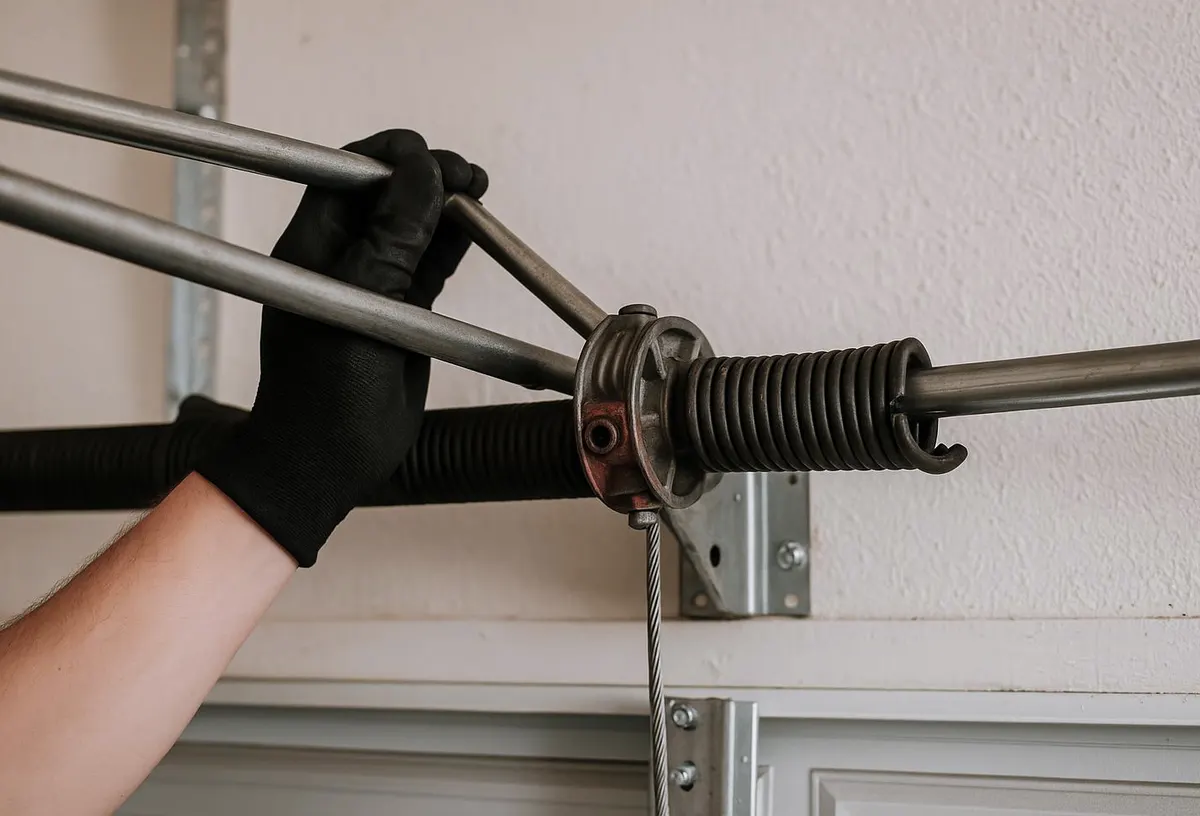
- Test the balance by disconnecting the opener and lifting the door halfway; it should stay in place. If it drops or shoots up, the springs are off and under more strain than they should be.
- Lubricate rollers and hinges with a garage-door-specific lubricant, not WD-40, which washes out quickly in wet weather.
- Locate the manual release and confirm it disengages the opener cleanly.
- Clear debris from the bottom track so the door can seat fully during high wind.
When to Call South San Francisco Garage Door
If your door is misaligned, the springs feel off-balance, or you've noticed rust building up on hardware near the coast, that's worth a visit before the rainy season peaks rather than after a storm forces the issue. We handle garage door maintenance visits that cover exactly the checklist above — track alignment, hardware tightening, weatherstripping, and lubrication — plus spring replacement when a spring shows wear or has already failed. For homes near SFO or along the coast where salt air speeds up corrosion, we'll flag hardware that's close to the end of its life so it doesn't fail during the storm that needs it most.
If you're in South San Francisco, Daly City, San Bruno, Pacifica, Millbrae, Burlingame, Colma, or Brisbane and want your garage door checked before the next storm rolls in, call South San Francisco Garage Door. We'll get out to your home, go through the door and opener, and make sure it's ready to hold up when the wind picks up.