
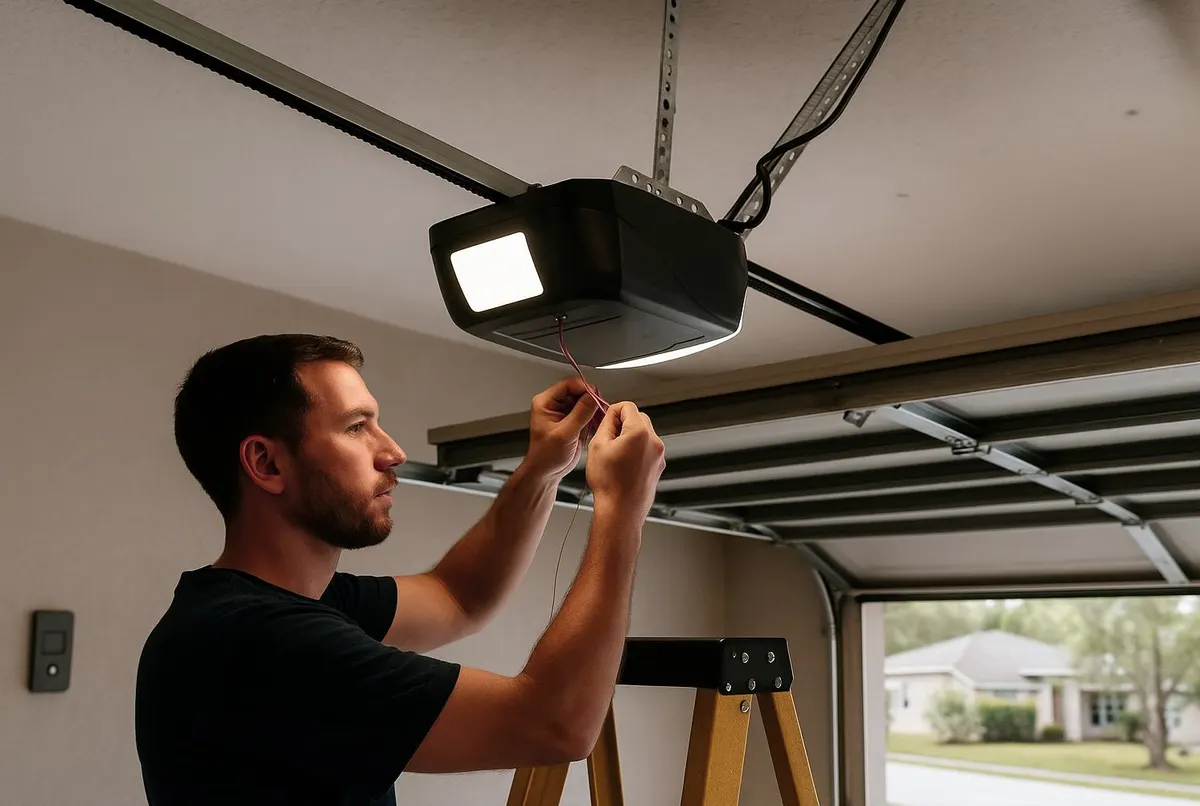
What a Technician Sees on a Typical Call
The call usually starts the same way: the door used to move quietly and now it doesn't. Homeowners describe a grinding or scraping noise partway through the cycle, a door that looks tilted or sits unevenly when closed, or rollers that visibly jump the track and need a hand to pop back in. Sometimes the door simply stops moving and the opener strains against it. By the time most people call, they've already tried lubricant spray, which helps for a day or two and then the noise comes right back — a sign the problem isn't the rollers themselves, it's the path they're riding in.
Symptoms Worth Paying Attention To
- Visible gap between a roller and the track, especially near the bottom bracket or at the curve where horizontal track meets vertical track.
- Scraping or grinding noise that happens at the same point in the door's travel every time.
- Door looks crooked when closed — one side sits lower, or there's a wider gap at one edge of the frame than the other.
- Slow or jerky movement, or the opener motor working harder than it used to.
- Panels or sections not sitting flush against each other.
Any one of these on its own might be minor. Several together usually mean the track has shifted out of alignment, and ignoring it lets the problem get worse — a door that's rubbing today can jump the track completely in a few weeks, which is a bigger and more expensive repair.
Causes, in the Order a Technician Checks Them
1. Loose or Shifted Mounting Brackets
This is the first thing checked because it's the most common and the easiest to confirm. The brackets holding the track to the frame can work loose over years of door cycles, vibration from the opener, or just age. A quick visual and a tug on each bracket reveals play that shouldn't be there. The fix: re-tightening or replacing the bolts, sometimes with slightly longer fasteners if the wood frame has worn around the original holes.
2. Worn or Damaged Rollers
Next up are the rollers themselves. Nylon rollers wear down over time, and in homes closer to the coast, salt air speeds up corrosion on the metal stems and bearings. A roller that's worn unevenly or seized in its housing will drag against the track edge instead of rolling smoothly through it, which can bend the track over time even if the track started out straight. The fix: replacing the affected rollers, usually in sets rather than one at a time, since the others are likely close behind.
3. Bent Track Sections
If brackets and rollers check out, the track itself gets inspected for a visible bend or twist. This often comes from an impact — a car bumper clipping the bottom section, a bike or ladder leaned against it, or someone backing into the door. Even a small dent changes the width of the channel the rollers ride in. The fix: minor bends can sometimes be hammered back into shape on site; more significant damage means replacing that section of track rather than risk it failing again under the door's weight.
4. Door Panel or Section Damage
Sometimes the track is fine but a warped or dented panel is pulling the whole door out of true as it travels. This shows up as a door that binds only when a specific section reaches the track. The fix: depends on severity — a single damaged section can often be replaced without redoing the whole door, especially on newer sectional doors.
5. Frame or Foundation Movement
Last on the list because it's the least common, but worth ruling out in older homes or after any earthquake retrofit work: if the framing around the opening has shifted slightly, the tracks mounted to it shift too, even when they themselves are undamaged. The fix: re-shimming and re-anchoring the track to match the new frame position, sometimes with adjustments to the track's plumb and level rather than just tightening existing hardware.
When to Call South San Francisco Garage Door
A door that's scraping, hanging crooked, or occasionally jumping its track isn't something to keep spraying lubricant on and hoping it settles down — it usually gets worse under its own weight and spring tension. South San Francisco Garage Door handles this as part of standard garage door repair, checking brackets, rollers, and track alignment in that order, and can pair it with garage door maintenance if your hardware is showing general wear from age or coastal exposure. Give us a call if your door is dragging, off-track, or just doesn't look level anymore — we serve South San Francisco and the surrounding Peninsula and can usually get a technician out quickly to sort it before it turns into a bigger repair.